

What is Lichen Planus Pigmentosus?
Lichen Planus Pigmentosus (LPP) is a rare type of lichen planus. It is a condition in which there is persistent slaty-grey to brownish pigmentation, mainly on the face and sun-exposed areas. The pattern is mostly actinic, in which pigmentation may appear diffuse and symmetrical. It can affect flexural and sun-exposed areas of the body.
What is the prevalence of Lichen Planus Pigmentosus?
Lichen Planus Pigmentosus (LPP) is considered a rare condition, and its exact prevalence is not well established.
- Geographic Variability: LPP has been reported in regions including the Middle East, South Asia, and Latin America. It is notably reported in India and other parts of South Asia.
- Age and Gender: LPP is typically seen in adults, with peak occurrence reported between 30 and 50 years. A slight female predominance has been reported in some studies.
- Skin Type: LPP tends to be reported more frequently in individuals with darker skin types.
Is Lichen Planus Pigmentosus an autoimmune disorder?
Lichen Planus Pigmentosus is considered to have an immune-mediated inflammatory component and has been described as being related to autoimmune mechanisms, although its exact cause and mechanism are not completely understood.
- Immune response: T cells, including CD8+ T cells, are involved in the inflammatory process affecting the skin and may contribute to damage to skin cells and subsequent hyperpigmentation.
- While LPP shares features with other forms of lichen planus, it characteristically presents with pigmentation changes rather than the raised, itchy bumps commonly associated with typical lichen planus.
What causes Lichen Planus Pigmentosus?
While the exact etiology of LPP is unknown, several factors and associations have been proposed as possible contributors to its development:
- Genetics: A family history may increase susceptibility, although the exact role of heredity in LPP is not fully established.
- Sun Exposure: Ultraviolet (UV) light may contribute to or worsen pigmentation in some individuals.
- Immune Response: Autoreactive CD8+ T cells have been implicated in the inflammatory process affecting epidermal keratinocytes.
- Viral Infections: Lichen planus has been associated with hepatitis C infection, although this does not mean that infection is the cause of LPP in every person.
- Hormonal Changes: Hormonal fluctuations have been proposed as possible contributing factors, although their exact role in LPP is not completely understood.
- Environmental Factors: Exposure to certain chemicals or allergens in cosmetics, perfumes, or dyes may contribute to or aggravate pigmentation in some individuals.
- Skin Injury: Trauma, scratching, cuts, or sunburn may contribute to pigmentation changes or the development of new lesions in some cases.
The exact cause of LPP is still not completely understood. These factors should therefore be considered possible associations or contributing factors rather than confirmed causes in every person.
What are the symptoms of Lichen Planus Pigmentosus?
LPP is generally mild in terms of physical discomfort but presents visible pigmentation changes. The symptoms and appearance can vary between individuals.
1. Pigmented Patches or Spots
- Color: Brown, gray, dark purple, or slate-grey pigmentation may be seen.
- Location: Commonly affected areas include the face, neck, upper chest, and forearms. Other areas may also be involved.
- Texture: The affected skin may appear slightly rough or velvety in some individuals.
2. Often Asymptomatic
LPP often does not cause significant itching or pain, although some individuals may experience itching, irritation, or other discomfort.
3. Hyperpigmentation
The affected patches may become darker over time and can persist for months or years.
4. Usually No Raised Bumps or Ulcers
LPP does not usually present with the raised, purple, itchy bumps commonly associated with typical lichen planus. Ulceration is also not a typical feature.
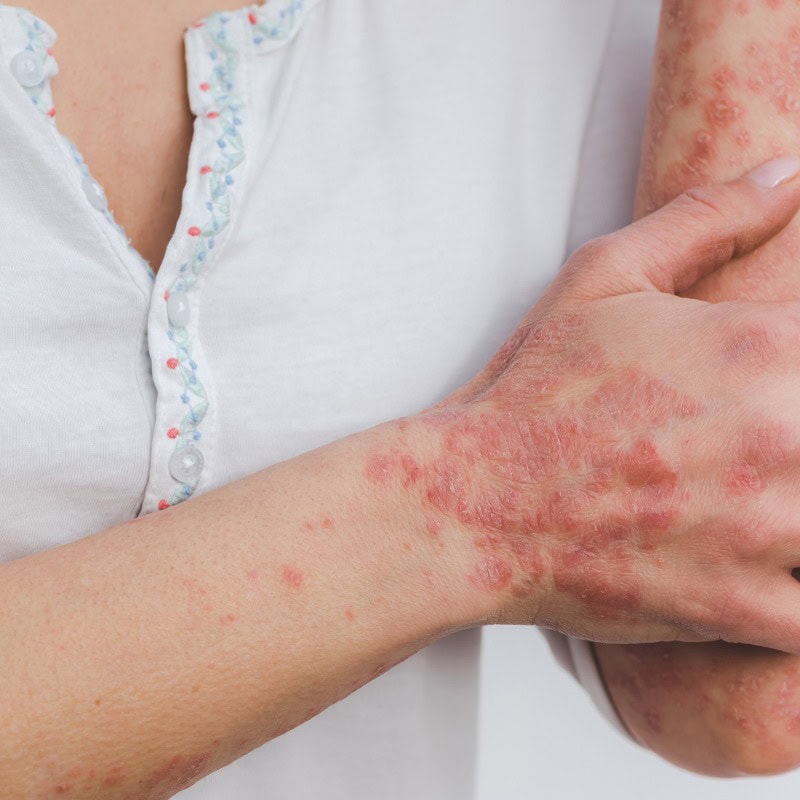
What does Lichen Planus Pigmentosus look like?
Initially, lesions may appear as oval or irregular pigmented macules with diffuse borders and may later merge into grey-brown pigmented areas. They may occur in different patterns, including blaschkoid, zosteriform, or segmental patterns.
How is Lichen Planus Pigmentosus diagnosed?
Diagnosis of LPP involves clinical evaluation and consideration of the patient’s history and appearance of the pigmentation.
Clinical Evaluation
The doctor may assess hyperpigmented patches or macules, their distribution, borders, duration, associated symptoms, and possible contributing factors.
Skin Biopsy
A skin biopsy may be recommended in some cases to help confirm the diagnosis and identify the characteristic inflammatory lichenoid response.
Differential Diagnosis
Several other conditions can produce similar pigmentation. These may include:
- Melasma
- Ashy dermatosis
- Lichenoid drug eruption
- Macular amyloidosis
- Acanthosis nigricans
Because several conditions can produce dark or grey-brown pigmentation, professional assessment is important before assuming that pigmentation is LPP.
What conditions can be associated with Lichen Planus Pigmentosus?
LPP has been reported in association with several other conditions. An association does not necessarily mean that a particular condition directly causes LPP.
Reported associations include:
- Metabolic conditions: Some reports have described LPP in people with obesity, hypertension, insulin resistance, or other metabolic conditions, although the relationship is not fully established.
- Type 2 Diabetes: Diabetes and other metabolic conditions have been reported in some patients, but a direct causal relationship with LPP has not been established.
- Thyroid Disorders: Thyroid disorders have been reported in association with immune-mediated conditions, although their specific relationship with LPP remains unclear.
- Other Lichen Planus Variants: LPP has been reported in association with conditions such as frontal fibrosing alopecia and oral lichen planus.
- Autoimmune Disorders: LPP has also been reported in some patients with conditions such as systemic lupus erythematosus (SLE) and rheumatoid arthritis.
Is Lichen Planus Pigmentosus contagious?
No. Lichen Planus Pigmentosus is considered a non-infectious condition and is not spread through physical contact, touching, or sharing personal items.
Also Read: Lichen Planus Treated Successfully by Homeopathy
How is Lichen Planus Pigmentosus generally managed?
General management of LPP depends on the individual’s symptoms, extent of pigmentation, possible contributing factors, and clinical assessment.
Skin Care
Keeping the skin moisturized and using gentle, fragrance-free cleansers may help reduce irritation and support the skin barrier.
Sun Protection
Appropriate protection from excessive sunlight may be helpful because UV exposure can contribute to pigmentation in some individuals.
Avoid Possible Triggers
- Avoid unnecessary skin trauma, including scratching, cuts, or burns.
- Consider whether particular cosmetic, fragrance, dye, or environmental exposures appear to aggravate the skin.
- Discuss any suspected medicine-related skin reaction with the prescribing healthcare professional rather than stopping a prescribed medicine independently.
- Managing stress and maintaining general skin care may be helpful as part of overall wellbeing, although the specific role of stress in LPP is not fully established.
How is Lichen Planus Pigmentosus approached in homeopathy?
In homeopathic practice, medicines for Lichen Planus Pigmentosus are selected according to the individual’s overall presentation rather than simply according to the diagnosis.
The homeopathic assessment may take into consideration the person’s skin symptoms, pigmentation pattern, associated complaints, medical history, and overall presentation.
The following medicines are described in the clinic’s homeopathic approach in relation to particular symptom presentations:
Antimonium crudum
The clinic’s homeopathic description associates Antimonium crudum with dry skin and intense itching. Skin may be described as having thick, hard scabs, sometimes honey-yellow, with cracks. Gastric derangements may also be considered when evaluating the overall symptom picture.
Thuja
The clinic’s homeopathic description associates Thuja with brown-coloured hyperpigmentation on the face, hands, and arms. Eruptions may occur on covered parts and may become worse after scratching.
Sulphur Iodatum
The clinic’s homeopathic description associates Sulphur Iodatum with papular eruptions accompanied by intense itching, particularly around the ears and neck. A sensation as if the hair is standing on end is also described in the homeopathic symptom picture.
Arsenicum album
The clinic’s homeopathic description associates Arsenicum album with burning skin eruptions accompanied by restlessness and anxiety. Nightly aggravation and exhaustion are also included in the described symptom picture.
Lachesis
The clinic’s homeopathic description associates Lachesis with skin and eruptions that may appear blue or black. Tight clothing around the neck may be poorly tolerated, and symptoms may be more pronounced on the left side of the body.
These descriptions represent symptom patterns used in homeopathic practice. They are not intended to identify one universally appropriate or clinically proven medicine for LPP. Homeopathic medicine selection is individualized according to the person’s overall presentation and should be discussed with a qualified homeopathic doctor.
Can homeopathy help with Lichen Planus Pigmentosus?
Some patients seek individualized homeopathic care for chronic skin conditions such as LPP.
At Dr. Thind’s Homeopathic Clinic, the approach is based on understanding the individual’s symptoms, medical history, and overall presentation before discussing an appropriate homeopathic approach.
Treatment response can vary between individuals. Patients should also seek appropriate professional assessment when the diagnosis is uncertain or when pigmentation changes.
Frequently Asked Questions About Lichen Planus Pigmentosus
What is Lichen Planus Pigmentosus?
Lichen Planus Pigmentosus (LPP) is an uncommon form of lichen planus that mainly presents with persistent brown, grey, or slate-coloured pigmentation, commonly affecting areas such as the face and neck.
What are the common symptoms of LPP?
The main feature is persistent pigmentation that may appear brown, grey, dark purple, or slate-grey. LPP is often asymptomatic, although some people may experience itching or irritation.
Does LPP commonly affect the face?
Yes. The face is one of the commonly affected areas in Lichen Planus Pigmentosus. The neck and other sun-exposed or flexural areas may also be involved.
What causes Lichen Planus Pigmentosus?
The exact cause of LPP is not completely understood. Immune-mediated inflammation, sun exposure, environmental exposures, and other possible individual factors have been proposed as contributors.
Is Lichen Planus Pigmentosus an autoimmune disorder?
LPP has an immune-mediated inflammatory component and has been described as being related to autoimmune mechanisms, but its exact cause and mechanism are not completely understood.
Is Lichen Planus Pigmentosus contagious?
No. LPP is not considered contagious and is not spread through touching, physical contact, or sharing personal items.
How is LPP diagnosed?
LPP is assessed through clinical examination and consideration of the patient’s history and pigmentation pattern. In some cases, a skin biopsy may be recommended to help confirm the diagnosis or distinguish LPP from other causes of pigmentation.
How is Lichen Planus Pigmentosus managed?
Management depends on the individual’s condition and may include general skin care, appropriate sun protection, avoidance of possible aggravating factors, and professional assessment.
Can Lichen Planus Pigmentosus improve?
The course of LPP varies between individuals. Pigmentation may improve in some cases but can also persist for a prolonged period.
What is the best homeopathic medicine for Lichen Planus Pigmentosus?
There is no single homeopathic medicine that can be considered the best for every person with Lichen Planus Pigmentosus. In homeopathic practice, medicine selection is individualized according to the person’s symptoms, pigmentation pattern, associated complaints, medical history, and overall presentation.
Which homeopathic medicines may be considered for the treatment of Lichen Planus Pigmentosus?
Different homeopathic medicines may be considered according to the individual’s symptoms and overall presentation. The medicines and symptom patterns described above form part of the clinic’s homeopathic approach.
Can I consult Dr. Thind’s Homeopathic Clinic for the treatment of Lichen Planus Pigmentosus?
Patients can consult Dr. Thind’s Homeopathic Clinic for an individualized homeopathic assessment related to Lichen Planus Pigmentosus. The consultation allows the doctor to understand the individual’s symptoms, medical history, and overall presentation before discussing an appropriate approach.