

What is ear wax?
Ear wax or cerumen is healthy in normal amounts and serves as a self-cleaning agent with protective, lubricating, and antibacterial properties. The absence of earwax may result in dry, itchy ears.
The ear canal is shaped somewhat like an hourglass, narrowing partway down. The skin of the outer part of the canal has special glands that produce earwax. This wax is supposed to trap dust and dirt particles to keep them from reaching the eardrum. Usually the wax accumulates a bit, dries out, and then comes tumbling out of the ear, carrying dirt and dust with it. Or it may slowly migrate to the outside where it can be wiped off.
Basics
- Ear wax protects the ear by trapping dust, bacteria, microorganisms and other foreign particles to prevent them from entering and damaging the ear.
- Ear wax also helps to protect the delicate skin of the ear canal from becoming irritated when water is in the canal.
- In some people, the glands produce more wax than can be easily removed from the ear. This extra wax may harden in the ear canal and block the ear. More commonly, wax may block the ear canal if you try to clean the ear and accidentally push wax deeper into the ear canal.
- Hearing aid and earplug users are also more prone to earwax blockage.
What are the signs and symptoms of excessive ear wax?
- Earache, fullness in the ear, or a sensation the ear is plugged
- Partial hearing loss, which may be progressive
- Noises in the ear
- Itching, odour or discharge
- Coughing
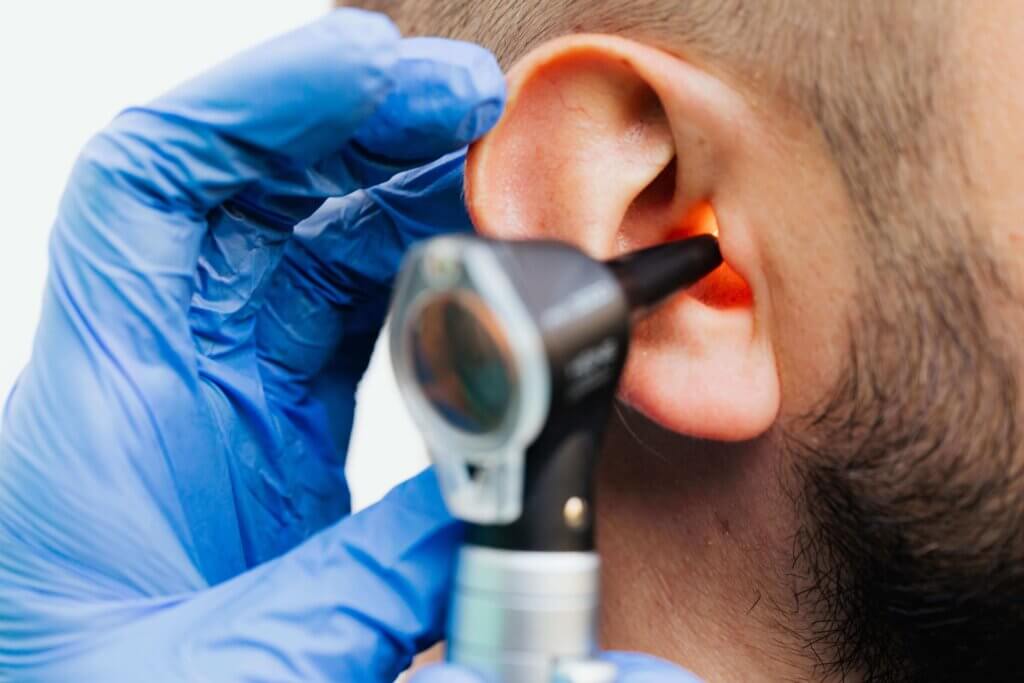
The ear wax blockage is diagnosed by the history of symptoms and otoscopy.
How can excessive ear wax be managed at home?
Wash the external ear with a cloth.
Avoid inserting anything into the ear canal.
Place a few drops of mineral oil, baby oil, glycerin, or commercial drops in the ear.
Cerumenolytic drops such as hydrogen peroxide or carbamide peroxide may also aid in the removal of wax.
Irrigation or ear syringing is commonly used for cleaning. Water and saline should be warmed to body temperature to prevent dizziness. Ear syringing is most effective when water, saline, or wax-dissolving drops are put in the ear canal 15 to 30 minutes before treatment. Caution is advised to avoid having your ears irrigated if you have diabetes, a perforated eardrum, a tube in the eardrum, or a weakened immune system.
Manual removal of earwax is also effective. This is most often performed by an otolaryngologist using suction, special miniature instruments and a microscope to magnify the ear canal. Manual removal is preferred if your ear canal is narrow, the eardrum has a perforation or tube, other methods have failed, or if you have diabetes or a weakened immune system.
What is the prognosis for excessive ear wax?
- Wax blockage of the ear usually responds well to removal attempts. However, it may happen again in the future.
- Hearing loss is usually temporary. Hearing usually returns completely after the blockage is removed.
What are the complications of excessive ear wax?
- Perforated eardrum
- Middle-ear infection
- External-ear infection
- Permanent hearing loss from acoustic trauma
What are the homeopathic medicines for excessive ear wax?
Causticum
- Well-indicated medicine for removing accumulated ear wax.
- There are ringing, roaring, pulsating sounds in ears with deafness.
- Words and steps re-echo in the ear.
- Well-indicated medicine for chronic middle ear catarrh.
Lachesis
- This medicine is given to a patient who is suffering from hard and dry wax in the ear.
- There is tearing pain from the zygoma into the ear, also with a sore throat.
Calcarea Sulphurica
- Well-indicated medicine for ear wax.
- Deafness with the discharge of matter from the middle ear, sometimes mixed with blood.
- There are pimples around the ear.
Anacardium Orientale
- Patient complains of hardness of hearing due to wax deposited in the ear.
- Pressing in the ears as from a plug.
- Well-indicated medicine for ear wax.
Hepar Sulph
- Hepar sulph is a medicine indicated for the discharge of fetid pus from the ears.
- Deafness after scarlet fever.
- Pustules in auditory canal and auricle.
- Whizzing and throbbing in the ears with hardness of hearing.
Pulsatilla
- Patient complains of sensation as if something were being forced out of the ear.
- Hearing is difficult as if the ear were stuffed.
- Catarrhal otitis.
- Diminishes acuteness of hearing.
- Otorrhoea.