

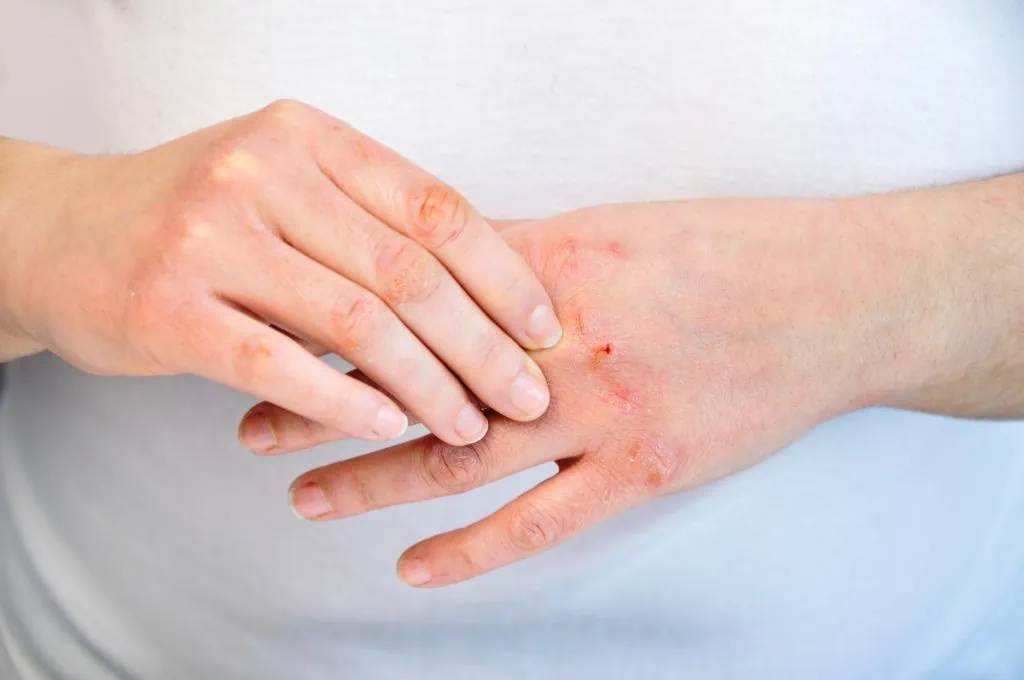
What is atopic dermatitis?
It is an inflammation of the superficial skin that causes dry, itchy, inflamed skin. It is characterized by flare-ups of eczematous pruritic lesions over dry skin. There are several causes and it can be acute or chronic.
- In acute cases, epidermal edema and intra-epidermal vesiculation are present predominately.
- In chronic cases, there is more epidermal thickening. It is associated with other atopic manifestations such as food allergy, allergic rhinitis, and asthma.
Can homeopathic treatment help in atopic dermatitis?
Yes, homeopathy and homeopathic remedies can help symptomatically by reducing the itching and severity of the disease. Homeopathy has good scope in treating cases of atopic dermatitis, and homeopathic medicines are safe and don’t have any side effects.
Some of the best homeopathic remedies for atopic dermatitis are:
- Graphites: Dryness of skin with absence of perspiration. Itching aggravated by warmth. Eruption oozing thick honey colored discharge.
- Psorinum: Intolerable itching. Eruption especially on scalp and bends of joints with itching, worse from warmth.
- Petroleum: Skin dry, constricted, very sensitive and leathery. Thick, greenish crust, cracks bleed easily.
- Sulphur: Dry, scaly, unhealthy. Itching, burning, worse from scratching and washing.
- Mezereum: Intolerable itching, with burning pain, worse at night.
Also Read: Homeopathic Management for Atopic Dermatitis
What are the causes of atopic dermatitis?
The exact cause of atopic dermatitis is entirely unknown, but several factors contribute:
- Genetic factors are important.
- The skin surface is dry and cracked.
- The epidermis is made with a defect in filaggrin protein, so there is a defective skin barrier.
- Weak immunity.
- Family history of allergic rhinitis or asthma.
- Environmental factors like humidity or dampness, and poor hygiene.
How does atopic dermatitis develop?
The subacute and chronic eczematous reaction caused by Type 1 (IgE-mediated) hypersensitivity reaction (release of histamine) produces prolonged severe pruritis. Our immune system triggers an inflammatory response that affects the skin. These causes develop many atopic dermatitis symptoms.
What are the triggering factors of atopic dermatitis?
The trigger factors for atopic dermatitis may vary from person to person. Some trigger factors worsen the symptoms, and these include:
- Strong soaps and detergents
- Some fabrics, like wool and synthetic fabrics
- Skincare products and cosmetics
- Some allergens (pollen, dander, dust)
- Physical irritants (dirt, sand, smoke)
- Anxiety and stress
- Cold, dry weather
- Heat and sweat
Foods that trigger atopic dermatitis:
Many foods can trigger atopic dermatitis. Some food allergens may include eggs, peanuts, tree nuts, soy, shellfish, wheat, cow’s milk and seafood.
Also Read: Food Triggers For Atopic Dermatitis
How common is atopic dermatitis?
Atopic dermatitis is quite common in children worldwide, and its prevalence is increasing. It affects males and females equally. Most commonly it occurs in infants and children. It affects approximately 65% within the first year of life, 15% to 20% of children and 1% to 3% of adults.
What does atopic dermatitis look like?
Atopic dermatitis tends to present as red, weepy, crusty, itchy, and flaky patches, like oval or circular-shaped areas on the skin.
Also Read: Skin Care Tips For Atopic Dermatitis
Is there any difference between eczema and atopic dermatitis?
The terms “eczema” and “dermatitis” are synonymous. Atopic dermatitis is also called atopic eczema.
What are the different phases of atopic dermatitis according to age?
It can occur anywhere in the body but most commonly affects the areas where the skin flexes, like behind the knees, inside the elbow, and in front of the neck. The distribution and character of the rash may vary with age.
- Infants (onset at 2 to 6 months old): Face, scalp, extensor surfaces
- Childhood (>18 months): Flexural surfaces
- Adult: Hands, neck, flexures, feet, eyelids, forehead, face, wrists
What is the classification of atopic dermatitis?
Endogenous
- Atopic dermatitis
- Seborrheic dermatitis
Exogenous
- Irritant dermatitis
- Allergic dermatitis
- Photoallergic dermatitis
- Chronic actinic dermatitis
Characteristic Patterns and Morphology
- Asteatotic
- Discoid
- Gravitational
- Lichen simplex
- Pompholyx
What are the different types of atopic dermatitis?
All types of dermatitis cause itchiness and redness. But atopic contact dermatitis is the most common and severe type. Other types include:
- Hand dermatitis: It affects the hand and is caused by frequent contact with irritating chemicals.
- Dyshidrotic dermatitis: It develops on fingers, palms and the soles of the feet.
- Neurodermatitis (lichenification): The skin is thickened in patches due to repeated rubbing or scratching.
- Nummular dermatitis: Causes coin-like spots that are often itchy.
- Stasis dermatitis: Develops in people with poor circulation, basically in the lower legs.
- Seborrheic dermatitis: An erythematous scaly rash affecting the scalp (dandruff), central face, eyebrows, chest and upper back. It is associated with the overgrowth of pityrosporum yeasts.
What are the clinical features of atopic dermatitis?
The most common symptoms are:
- Itching
- Dry, scaly skin
- Swelling and inflammation
Other symptoms of atopic dermatitis:
- Red, purple or brown rashes
- Scaly patches at the site of the rash
- Lightened or darkened skin spots
- Thick, leathery skin
- Raw, sensitive skin from scratching
- Oozing and crusting
What are the associated findings with atopic dermatitis?
- Keratosis pilaris (hyperkeratosis of the hair follicle)
- Xerosis
- Atopic palms
- Inflammation, lichenification, and excoriations secondary to persistent scratching
Is atopic dermatitis contagious?
No, this condition is not contagious. It cannot be spread through casual touch.
Also Read: Atopic Dermatitis in Children
When should you see a doctor?
See a doctor if you notice signs of skin infection, such as:
- A red rash on the skin
- Pain, swelling, or heat around the rash
- Discharge from the skin
- Tenderness around the rash
What are the diagnostic criteria for atopic dermatitis?
There is no particular test to diagnose atopic dermatitis. Pruritis and at least three of the following are required:
- History of itchy skin
- Dry skin (xeroderma)
- Visible flexural eczema
- Onset in the early age of life
- History of asthma, hay fever
Certain allergy tests (IgE) are performed to check allergy levels in the blood.
- Atopy Patch test: Used to assess delayed hypersensitivity against protein allergens.
- A skin biopsy may be required.
Also Read: Diagnosis and Assessment of Atopic Dermatitis
What are the differential diagnoses for atopic dermatitis?
- Contact Dermatitis
- Psoriasis
- Mycosis
- Molluscum contagiosum with dermatitis
- Scabies
- Seborrheic Dermatitis
- Tinea Corporis
What is the prognosis for atopic dermatitis?
- Skin completely clears in children.
- In some cases, however, the skin may remain dry.
What are the complications of atopic dermatitis?
Secondary infection:
- Bacterial infection: Staph. aureus
- Viral: Herpes simplex virus, papillomavirus, and molluscum contagiosum
Increased susceptibility to allergy:
- Food allergy: eggs, cow’s milk, protein, shellfish, wheat, and soya
- Increased risk of susceptibility to type IV allergens because of impaired barrier function
Impact on life and health:
- Poor sleep, behavioral difficulties
- Impact on work, hobbies, psychology and quality of life in adults
Also Read: Ways You Are Making Your Eczema Worse
What is the conventional treatment for atopic dermatitis?
- Corticosteroid creams and ointments are applied locally.
- In case of itching and allergies, oral administration of antihistamines is used.
- Antibiotics can be used in the form of oral pills or as ointments applied to the affected part.
- Ultraviolet A or B light waves are used; this process is called phototherapy.
How to manage atopic dermatitis?
Some self-care tips:
- Take a bath in cold water.
- Moisturize skin at least twice a day, immediately after the bath.
- Use mild soap and moisturizer.
- Apply an anti-itch ointment.
- Avoid scratching and rubbing.
- Wear cotton and comfortable clothing.
- Use a humidifier.
- Increase water intake.
- Treat stress and anxiety.
- Avoid exposure to dust, smoke, pollen etc.
Dietary management:
- An anti-inflammatory diet helps in reducing symptoms.
- Avoid dairy products.
- Eat foods rich in omega-3 fatty acids.
- Eat foods rich in potassium, like bananas, sweet potatoes and avocado.
- Limit alcohol and spicy food.
- Take a fiber-rich diet.
- Avoid preservative-containing food and fried food.
- Avoid egg, fish and meat if these trigger symptoms.
- Avoid citrus food.
Also Read: Lifestyle Changes for Atopic Dermatitis
Can atopic dermatitis disappear on its own?
No, it can’t. Atopic dermatitis needs treatment and proper care. It affects not only the skin but also self-esteem and confidence. So, don’t delay or ignore the treatment. Treat it with safe and natural homeopathic medicines.
Also Read: Foods to Eat in Atopic Dermatitis